AW Player
- 3.3
- Rating
- 500.00K
- Installs
- Free
- Price

 Analysis by App-foxy
I approached AW Player as a practical Android video tool rather than as a feature showcase. Its purpose is straightforward: open videos, make them easier to watch, and fit into the everyday moments when the default player feels limited. That simplicity is useful, but it also means the experience depends heavily on how comfortable you are with a compact, conventional media-player interface.
The app comes from AWY Studio and sits in the video players and editors category. It is free to install, suitable for everyone, and supports Android devices running version 6.0 or later. The current release is version 3.2, and its reach is already substantial, with over 500 thousand installs. Those details make it easy to try on an older spare phone as well as on a newer device, although the modest average rating of 3.3 from roughly 849 ratings suggests that the experience is not equally smooth for every user.
How AW Player feels in everyday use
I find AW Player easiest to judge by the small choices that shape a viewing routine: how I prepare a clip, how I keep it easy to locate, and whether the app remains comfortable after the first few uses. I’ll look at the habits that can make it useful over time, along with the points where a different player may be less work. That distinction matters more than novelty when deciding what deserves a place on my phone.
You May Also Like

 Blood Strike: 2.5 Anniversary
Blood Strike’s Loadouts Turn Every Drop Into a Tactical Gamble
A close look at Blood Strike’s custom loadouts: how fast access to signature weapons reshapes its battle royale rhythm, rewards preparation, and narrows the gap between fights.

 Pandora - Music & Podcasts
Pandora’s Music Is Easy to Start, but Harder to Recover
Pandora’s strength is its low-effort path from a seed to a station. Its weak spot is how much confidence it asks you to place in connection, setup, and quiet recovery.

 8 Ball Pool
 Is Built on Rivalries, Rematches, and Routine
A close look at the rivalries, rematches, shared routines, and unanswered safety questions that turn a quick pool match into a persistent mobile community.

 Samsung Music
’s Quiet Strength Is Playing What You Already Own
Its reach comes less from spectacle than from dependable access to a personal library. That simplicity is both the app’s strongest retention engine and its ceiling.

 AccuWeather: Weather Radar
AccuWeather Review: A Quick, Clear Forecast for Everyday Decisions
For everyday plans, the best forecast is the one you can understand quickly. AccuWeather makes rain timing, radar, and local conditions easy to act on, with a few trade-offs.

 Hill Climb Racing
Why Hill Climb Racing Still Turns Crashes Into One More Run
A tiny car, a bumpy hill and one more upgrade: Hill Climb Racing keeps resurfacing because its simple chaos makes every near-miss feel personal.
More From Our News Desk
View All News


Readability and navigation come first
My first impression is that AW Player is easiest to understand when I treat it as a direct route from a video file to playback. I do not need to learn an elaborate editing workflow or work through a complicated media library before watching something. That is a real advantage for anyone who wants fewer decisions between opening an app and starting a video.
The straightforward approach also helps when I am handing a phone to someone else. A family member who only needs to locate a clip and play it is less likely to be distracted by recording tools, social features, or a crowded content feed. In that sense, the app’s ordinary video-player identity is more helpful than a design packed with unrelated options.
Still, simple does not automatically mean accessible. A player can have fewer controls while making those controls harder to discover, especially for someone who does not regularly use media apps. I would spend a few minutes learning where the main playback actions are before relying on it for another person. That small preparation matters when the user has limited confidence with touchscreens or becomes frustrated by hidden controls.
For regular viewing, I recommend keeping the phone at a comfortable distance and checking the display before starting a long video. The app is most approachable when the screen is uncluttered and the viewer already knows the basic gestures or buttons used by Android media players. I would not choose it expecting a guided, highly personalized interface that explains every action as I go.
What the design means for different abilities
For users with mild visual difficulties, the main benefit is the focused task. There are fewer competing activities than in a full video-editing suite, so attention can remain on the video itself. I also find that a dedicated player is easier to use than opening clips through a file manager and then dealing with whichever application Android selects automatically.
That benefit has limits. I would not assume that every label, icon, or playback control is equally clear for someone with low vision. The practical experience will depend on the phone’s display, system text settings, contrast, and the user’s ability to identify controls. If a viewer needs very large interface elements, strong visual separation, or dependable spoken guidance, the usual device accessibility settings and a player known to work well with those settings may be a better starting point.
For people with hearing loss, a video player’s usefulness depends on the video itself and on whether its available captions can be reached comfortably. I would check a sample clip before committing to AW Player as a primary viewing app. If captions are essential for every video, a more specialized option with clearly documented caption controls may offer greater confidence.
Users with motor difficulties may appreciate not having to navigate a large editing workspace. Fewer tasks can mean fewer taps. At the same time, playback controls that appear only after touching the screen can require accurate timing and positioning. Someone who has trouble with small targets or repeated gestures should test the app with their usual device settings, perhaps using Android’s built-in touch assistance where appropriate.
A realistic routine: watching a downloaded lesson
One everyday situation shows where this app makes sense. Imagine I have downloaded a lesson before leaving home and want to watch it during a commute. I open the player, select the file, and use the phone in a quiet moment without needing an internet connection for the viewing itself. The value here is not a special media trick; it is the reduced number of steps between a locally stored video and the screen.
For that routine, I would prepare in advance. I would confirm that the video is stored somewhere I can find easily, start playback before the journey becomes busy, and use headphones only if I can still remain aware of my surroundings. A person with sensory sensitivity may prefer a lower-volume setting, a familiar display brightness, and a less crowded environment. The app can be part of that routine, but it cannot remove the practical demands of watching video on a small mobile screen.
Another useful case is reviewing a short clip sent by a friend or copied from another device. A dedicated player can be less distracting than opening a social platform where notifications and recommendations compete for attention. I like that focused role. It makes AW Player feel more suitable for private, ordinary playback than for people who want their player to double as a content community.
Situational access on older and shared devices
Because the minimum operating-system requirement reaches back to Android 6.0, AW Player is relevant to people who keep an older phone for travel, children, offline media, or occasional use. That broad compatibility is helpful in households where replacing a device is not practical. I would still judge the experience on the actual handset, since age, screen quality, storage, and general responsiveness can affect playback more than the app’s compatibility line alone.
The free entry point also lowers the risk of testing it. There is no purchase required just to find out whether the interface suits a particular viewer. The app does include in-app purchases priced at $2.99 per item, so I would be careful when setting it up for a child or for someone who may tap unfamiliar prompts. A free installation is not the same as a completely frictionless experience once optional purchases are present.
For a shared family phone, I would create a simple routine: keep the videos in a known location, avoid mixing personal clips with confusing folders, and teach the viewer one reliable way to return to the video list. That approach can make a basic player much easier to use than a more powerful alternative with many menus. It also reduces the need for precise navigation when the phone is passed between people with different levels of technical confidence.
In bright outdoor conditions, screen reflections and low contrast can make any mobile player difficult to use. In a dark room, a bright display may be uncomfortable for someone sensitive to light. I would adjust the phone’s brightness and system display settings first rather than expecting AW Player itself to solve the environment. The app is a tool inside a larger setup: phone, screen, audio, file organization, and surroundings all affect access.
Where it differs from the usual alternatives
The most common alternative is the video player already installed on the phone. That default option has an important advantage: it is familiar, already connected to the system, and often opens videos automatically. If it handles the files I watch and its controls are comfortable, switching may not be worthwhile.
AW Player becomes more interesting when I want a separate, purpose-built place for videos. It can keep playback apart from photo galleries, social feeds, or editing applications. That separation is useful for someone who wants a calmer viewing routine, or for a shared device where a dedicated player is easier to explain than a multipurpose media hub.
Another alternative is a full video editor. Editors are better when I need to trim, arrange, caption, or export a project. They are usually the wrong choice for simply watching a clip, because their timelines and toolbars add visual and motor demands. AW Player’s narrower role is a strength if playback is the goal, but it is not a replacement for editing software just because it appears in the same broad media category.
Streaming applications are different again. They are designed around online libraries, recommendations, accounts, and continuous discovery. AW Player is a better fit for videos I already have on the device. If my priority is finding new programs, synchronizing viewing across devices, or managing an online subscription, I would choose a streaming service instead.
Small workflow choices that improve the experience
My first tip is to test the app with the exact kind of file I expect to watch. A player can feel excellent with short, familiar clips and less convenient with a large collection or an unusual format. Testing before a trip or class prevents the common mistake of discovering a playback problem when there is no time to change tools.
My second tip is to separate “finding the file” from “watching the file.” If the video is buried among downloads, the player may feel confusing even when playback is fine. I would organize important clips beforehand and give them recognizable names. This is especially helpful for users with cognitive or memory difficulties, because a clear file location reduces the number of decisions required.
My third tip concerns touch. I would avoid relying on rapid repeated taps if the viewer has reduced dexterity. Start the video, pause deliberately, and use the phone’s system-level touch features when they make controls easier to reach. A simple player is not automatically easy for every hand, so the best result comes from combining it with the device settings the viewer already knows.
A fourth trade-off is privacy and attention. A standalone player may be preferable when I do not want a video mixed with social notifications or recommendations, but local files still need sensible organization on a shared phone. I would avoid leaving sensitive clips in an obvious folder and would make sure the intended viewer can reach their own videos without opening unrelated content.
Remaining barriers worth considering
The biggest barrier is uncertainty about how well the interface will suit a particular accessibility setup. The app is presented as a powerful Android video player, but that description does not tell me enough to guarantee comfortable use with every combination of large text, screen magnification, switch access, captions, or spoken feedback. I would treat compatibility with personal accessibility needs as something to test, not something to assume.
The rating also encourages a measured approach. An average of 3.3 is neither a reason to dismiss the app immediately nor a reason to expect a flawless experience. It tells me to try the specific playback tasks that matter to me: opening a local clip, locating controls, pausing accurately, adjusting the viewing environment, and returning to the file list.
The optional purchase model may be another point of friction. Even though the app is free to start, people who need a completely predictable setup should review any purchase prompts carefully. This matters most on shared devices, children’s phones, and phones used by people who may have difficulty distinguishing a playback control from a paid option.
I would also skip AW Player if I need a documented accessibility-first experience, advanced caption management, a polished media library across several devices, or serious editing tools. In those situations, a specialized alternative is likely to justify its extra complexity. AW Player is more convincing when the requirement is narrower: open videos on Android and watch them without turning the task into a larger project.
My inclusive verdict
I see AW Player as a reasonable free trial for Android users who want a separate, uncomplicated place to watch locally available videos. Its support for older Android versions, focused purpose, and low initial cost make it approachable for spare phones, shared devices, offline lessons, and ordinary personal clips. The developer, AWY Studio, has kept the idea easy to understand even if the real comfort of the interface will vary from person to person.
My recommendation is conditional rather than universal. I would suggest it to a friend who values direct playback and is willing to spend a few minutes testing the controls with their own phone, files, and accessibility settings. I would not recommend installing it blindly for someone who depends on captions, spoken navigation, large touch targets, or highly predictable purchase-free interaction without first checking those needs in practice.
The best reason to try AW Player is its focused role; the best reason to be cautious is that focused does not always mean fully inclusive. If it opens your videos reliably and its controls are comfortable, the app can be a useful everyday companion. If the interface creates extra effort for your vision, hearing, movement, attention, or environment, the default player or a more specialized alternative may serve you better. That is the fair conclusion I reached: AW Player is worth testing, but its value depends on the person holding the phone as much as on the app itself.
FAQs for AW Player
01What is AW Player, and what can I use it for?
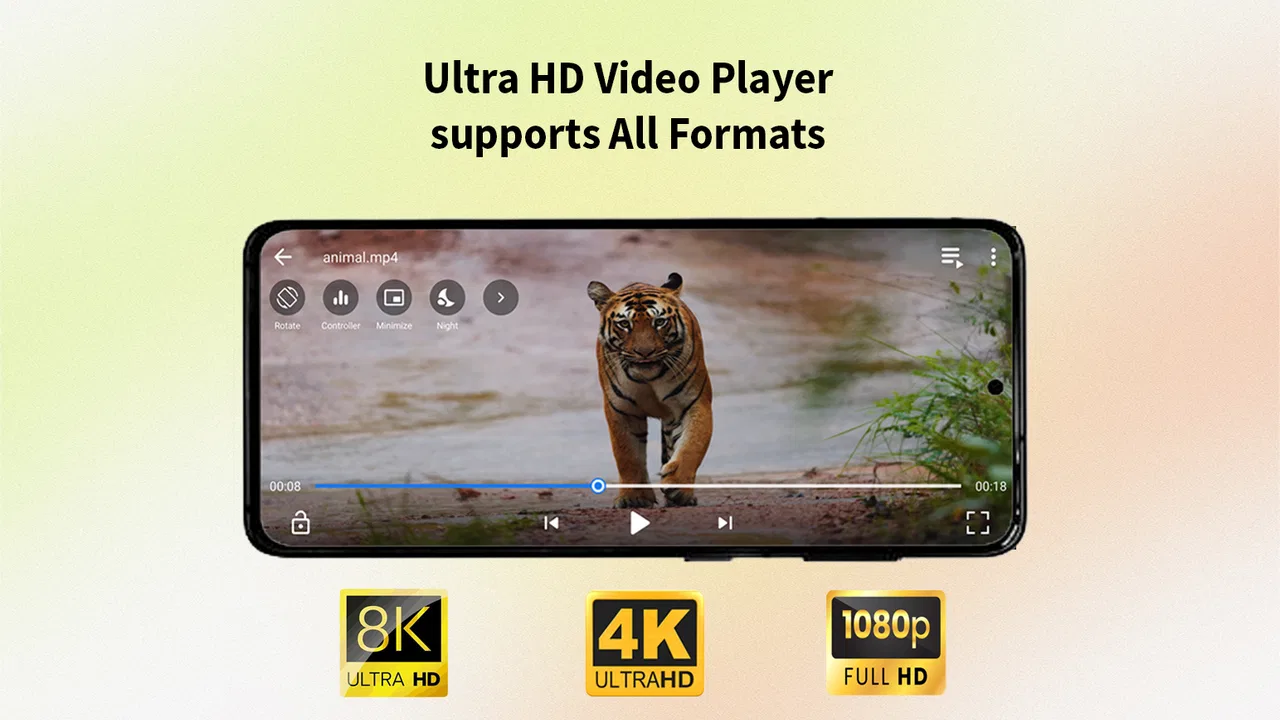
AW Player is a media player designed for watching or listening to locally stored content on a mobile device. Depending on the version and platform, it may support common video and audio formats, playlist management, subtitles, and basic playback controls. It is best suited to users who want a straightforward player rather than a full streaming service or content library.
02Does AW Player support all video and audio formats?
AW Player can handle many popular media formats, but compatibility is not guaranteed for every file. Support may depend on the codec, container, audio track, subtitle type, and the operating system running the app. Before downloading, users with specialized or high-resolution files should check the store listing and test a representative file, especially if reliable playback is essential.
03Can AW Player play files stored on my phone or tablet?
The app is primarily useful for playing media already available on the device, although the exact file-access features can vary between Android and iOS versions. You may need to grant permission to access storage or import files through the system sharing menu. Files protected by digital rights management or stored in unsupported locations may not open normally.
04Does AW Player require an internet connection or an account?
For locally stored media, AW Player generally does not need a continuous internet connection, which makes it convenient for travel or areas with limited connectivity. However, internet access may be required for downloading the app, checking updates, or using optional online features. Whether registration is necessary depends on the specific version and features offered by the developer.
05Is AW Player free, and are there advertisements or in-app purchases?
The cost and monetization model of AW Player can differ between platforms, regions, and app updates. Some versions may be free with advertising, while others may offer paid upgrades or additional features. Review the current Google Play or App Store listing before installing, and check the permissions, subscription terms, and privacy information so there are no surprises after download.
Pros
- Supports a wide range of common audio and video formats.
- Simple interface makes playback easy for new users.
- Offers useful playback controls
- including speed adjustment.
- Can handle local media without requiring a streaming subscription.
- Compact design uses fewer resources than many full media suites.
Cons
- Some advanced features may require in-app purchases or upgrades.
- Interface customization options are relatively limited.
- Large video files may cause lag on older phones.
- Subtitle support can be inconsistent with certain file formats.
- May display ads during use
- depending on the app version.

AW Player
Gallery